Rosamonde Hatton
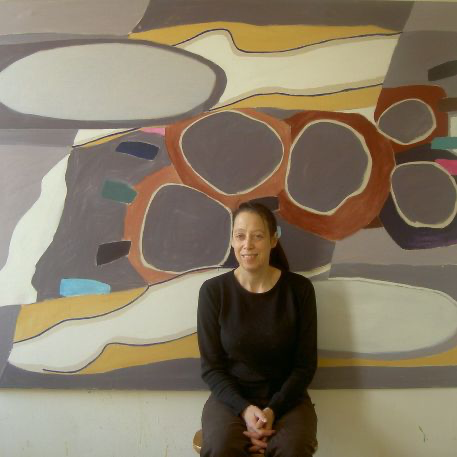
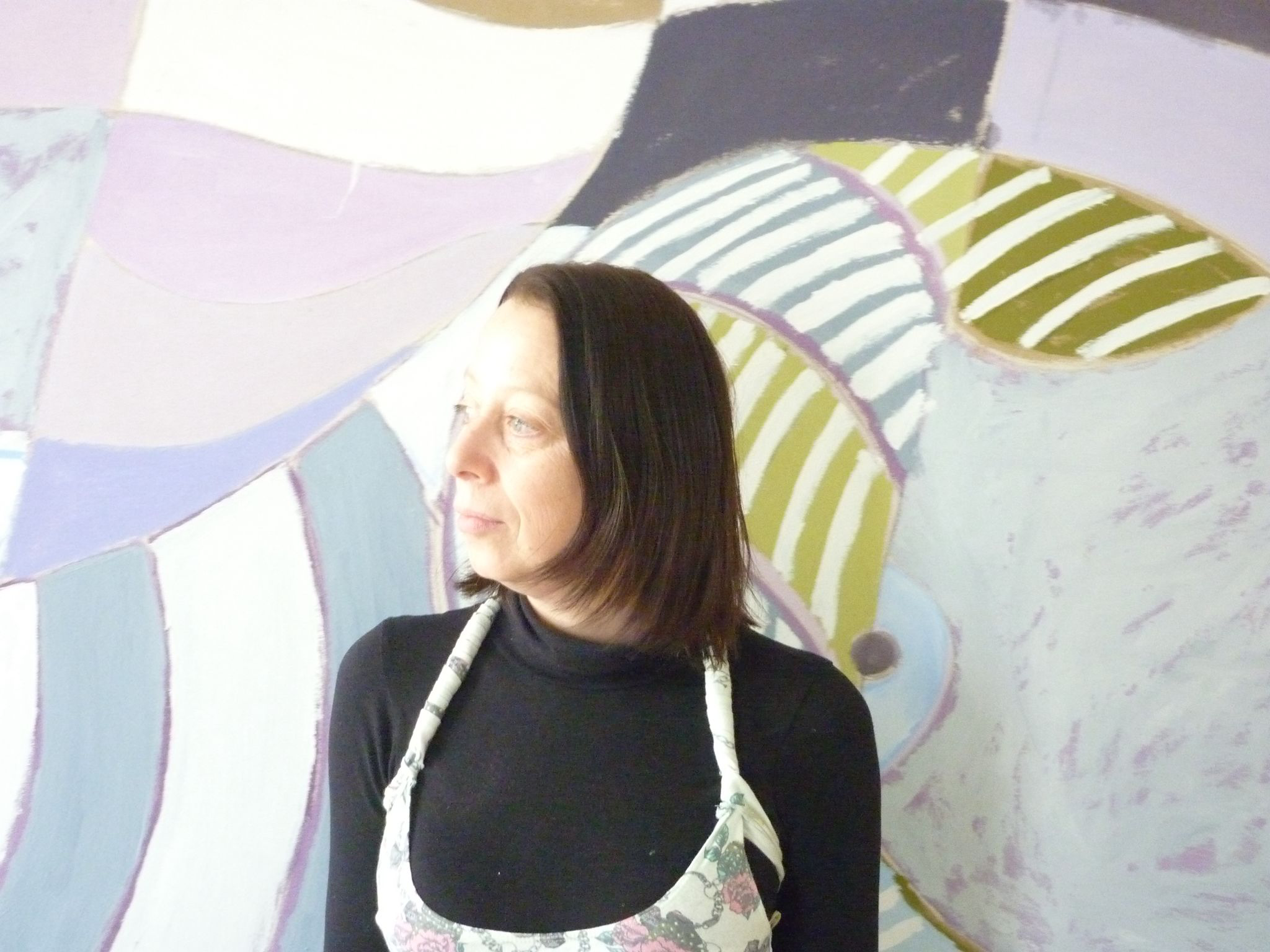
Rosamonde Hatton (1952-2024) grew up in a family in West London where the appreciation of art and its creation were viewed as an essential part of life. Throughout her own life, she put those values into practice.
She started student life at St Martin’s School of Art in 1973 on the fashion course but quickly realised that painting was what she needed to do and switched to fine art where she flourished during that extraordinary period at the art school. On graduation, her work appeared in the Winsor and Newton Award Show at the Mall Galleries, and she took up a studio in the legendary Butler’s Wharf artists’ enclave next to Tower Bridge, alongside the likes of Derek Jarman, Andrew Logan and Maurice Agis.
Throughout the 1970s through to the 1990s, she exhibited widely from the Barbican Centre to the Whitechapel Gallery appearing in the John Moore’s exhibition, the Royal Academy Summer Show and many others as well as exhibiting solo shows in settings as diverse as the Tricycle Theatre and the Vortex Gallery.
Her work is in collections of St Bartholomew’s Hospital and Leicestershire County Collection amongst others.
After Butler’s Wharf, she moved studios to the highly renowned Barbican Arts Group where she was a central figure.
Rosamonde lived the life of an artist. That was what she needed to be. She needed to paint.
As fashions in painting waxed and waned, Rosamonde remained steadfastly abstractionist in her work, painting on large canvases. She was pleased if someone liked her work or indeed bought it – but the truth was that didn’t really matter to her. It was the making of art – the doing of it that she cared about.
She thought constantly about shapes, forms, structure and most of all colour. She detested the browns and greys embraced by so many British painters. She loved light, sun, radiant oranges and pinks.
Her knowledge of twentieth century art ran deep and she had a well-stocked bookshelf stuffed with books by and about her favourite artists. The practice of being an artist is what really interested her.
Rosamonde liked her art to speak for her. But perhaps her great hero Frank Stella, who died just four weeks after Rosamonde, summarised her approach best.
“The gap between experience and understanding is often difficult to close. Confronted by art, most people can’t help wanting to know what it means. Even now when people ask me about the meaning of my paintings, the question usually forms itself as a challenge or a dare of some kind. I usually wince, shrug my shoulders and walk away.
At its most exhilarating moments, great art is indifferent to the niceties of composition and the issues of quality: however it is never indifferent to the creation of viable pictorial space, the vehicle of motion and containment. Great painting will sweep us away – knowing or unknowing.”